What is Cognitive Behavioral Therapy (CBT)?
Cognitive Behavioral Therapy also called CBT for short is a structured, evidence-based form of therapy that focuses on the connection between our thoughts, emotions, and behaviors. CBT helps clients identify unhelpful patterns of thinking and behavior, understand how these patterns may contribute to emotional distress, and develop practical strategies for creating meaningful change.
CBT is collaborative and goal-oriented, with an emphasis on developing skills that clients can use both in and beyond therapy. It can be effective for a wide range of concerns, including anxiety, depression, stress, low self-esteem, weight loss, sleep problems, relationship difficulties, and other emotional or behavioral challenges.
Through CBT, clients learn to approach difficult thoughts and situations in new ways, build healthier coping strategies, and work toward lasting improvements in their emotional well-being.
How does CBT work?
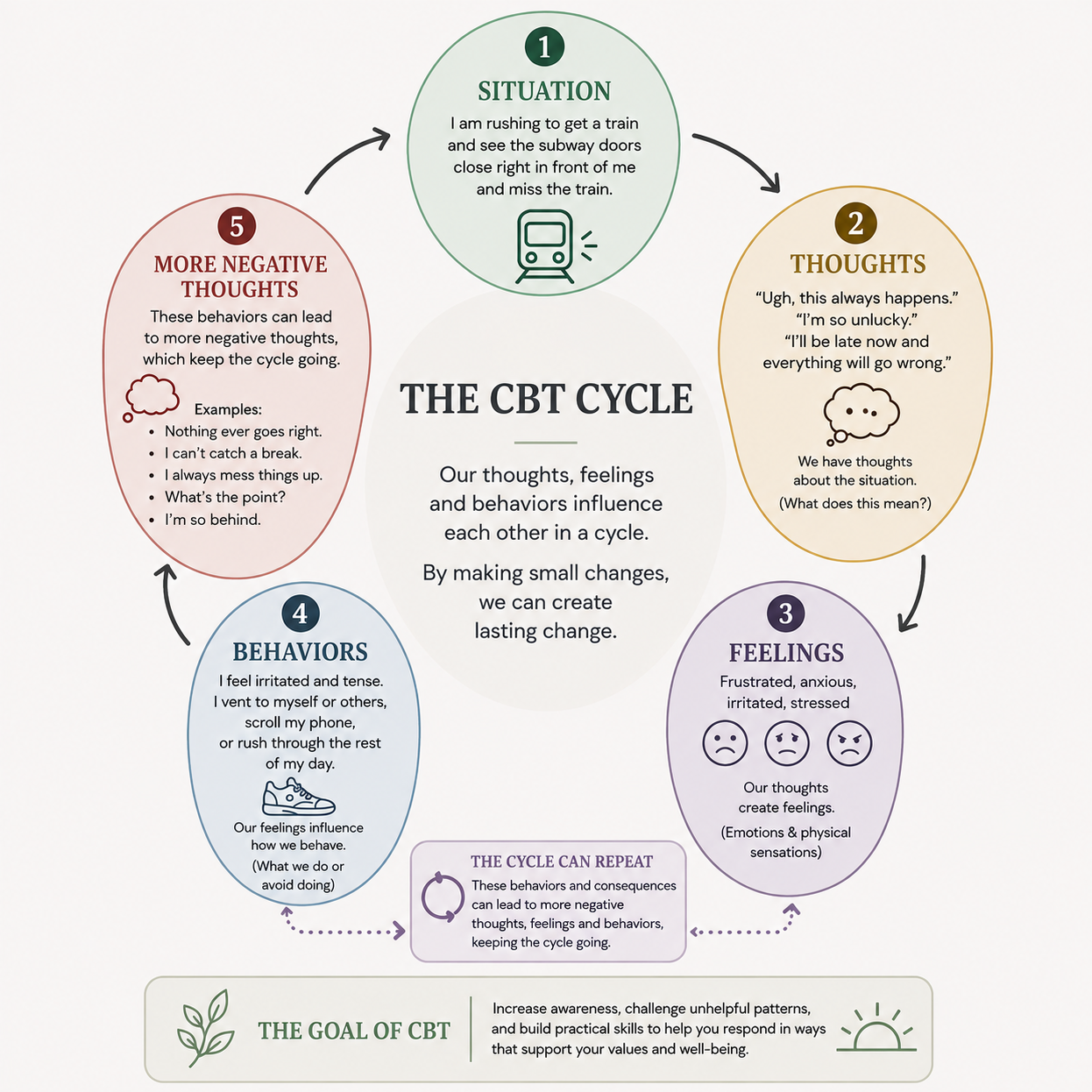
Cognitive Behavioral Therapy (CBT) is based on the idea that our thoughts, feelings, and behaviors are interconnected. When we experience distress, we can become caught in patterns of thinking and behaving that unintentionally maintain or worsen how we feel. It is not the situation causing distress but rather how you think about it. Our thoughts are not always 100% true or based on the facts. These unhelpful thoughts lead to negative emotions and unhelpful behaviors that only reinforce the negative thoughts which maintain the problem. In other words, they are all interconnected.
In CBT, we work together to identify these patterns and develop more helpful ways of responding. This may involve examining unhelpful thoughts, changing behaviors that contribute to difficulties, developing practical coping skills, and gradually approaching situations that may have been avoided.
CBT is collaborative and goal-focused. Sessions often include practical exercises and strategies that clients can practice between appointments. Over time, these skills can help clients feel more confident in managing difficult emotions, responding to challenges differently, and creating lasting change.
How is CBT different from other types of therapy for anxiety?
Unlike more open-ended or insight-focused therapies, CBT teaches practical skills to examine thoughts, test their accuracy, and change behaviors that maintain anxiety. It also incorporates examining behaviors that may be maintaining anxiety such as avoidance and procrastination.
CBT helps reduce panic attacks, worry, intrusive thoughts, obsessions and compulsions and avoidance/procrastination. Sessions typically include psychoeducation, thought records, behavioral experiments, and between-session practice so clients learn to become their own therapist over time. Progress is measurable and often faster than traditional talk therapy alone.
How can CBT help with dating and body image?
CBT helps with dating anxiety and body image by teaching you to identify and challenge the automatic thoughts and beliefs that fuel self-criticism, fear of rejection, or avoidance.
For dating anxiety, Jennifer Stone, LCSW-R helps clients examine predictions about rejection, reduce safety behaviors (such as excessive texting or canceling plans), and build confidence through gradual behavioral experiments. For body image concerns, CBT focuses on reducing body checking, comparison, and harsh self-evaluation while developing more balanced, compassionate ways of relating to your body. Clients learn practical tools they can use in real-life situations, leading to less anxiety and greater freedom in dating and daily life.